Group
Nodes that collapse several nodes into one that you can dive into. 3 in total. They exist to tidy up a graph that has grown large and to reuse a mechanism you have built as a part.
Node list
| Node | Where to place it | Role |
|---|---|---|
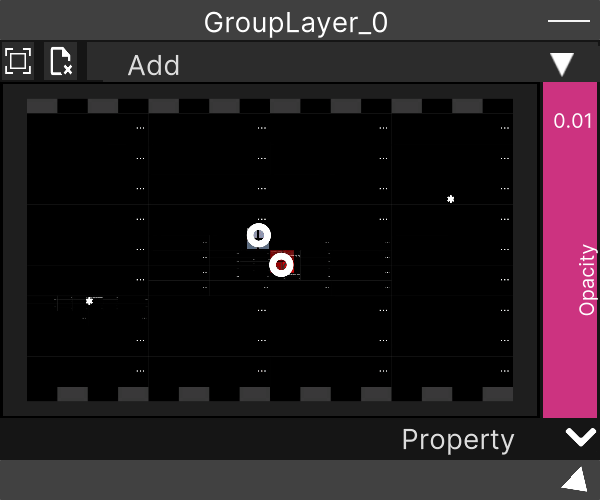
| Group | The outer graph | The nested subgraph itself. Dive in with the ”▶ Enter” button on the node or by zooming in, and zoom out to come back |
| Group In | Inside the group | The group’s entrance. Supplies values coming from outside to the graph inside |
| Group Out | Inside the group | The group’s exit. Returns the inner result to the outer graph |
Boundary ports are grown from the inside
The Group node itself has no ports at first. Place a Group In / Group Out inside it and the corresponding port appears on the outer Group node.
- Place a Group In inside the group → the outer Group gains one input port
- Place a Group Out inside the group → the outer Group gains one output port
Both Group In and Group Out have a label, which becomes the name of the port that appears on the outside.
Give them clear names and you will still know what each opening is for after collapsing.
Types are determined differently for In and Out
- Group In: choose it explicitly from the Type dropdown on the node (Any / Texture / Float / Int / Bool / Color / String / Rect / Trigger / Material). The default is Any (anything passes through)
- Group Out: it automatically takes on the type of the first connection made inside, and returns to Any when there are no connections left
The same Group In / Out handles both a float and a RenderTexture, so there is no need to prepare dedicated nodes for each group.
Ungroup with Ctrl+Shift+G
Select a group and press Ctrl+Shift+G to expand the nodes inside into the outer graph.
Export and Save as Preset
A Group node has two buttons for carrying its contents out as a file.
- Export: opens a save dialog and writes the group’s contents as a
.synapsegroupfile. It can be brought back via the node editor’s right-click menu → Import Group - Save as Preset: saves the group under its name into your preset folder without a dialog, and it appears in the Presets category of the node list right away. Saving again under the same name updates the contents. If the group outputs video, that image becomes its thumbnail in the list
Neither format includes Control Panel / Widget Panel assignments (so that loading one never overwrites your existing panel setup). For how presets work and where the files live, see Presets.
Related
- For operating the node editor, see Node Editor